Why every e-signature could soon be contestable
e-Signatures
Future of agreements
Legal disputes
19/05/2026
13 min read

10 September 2025
9 min read
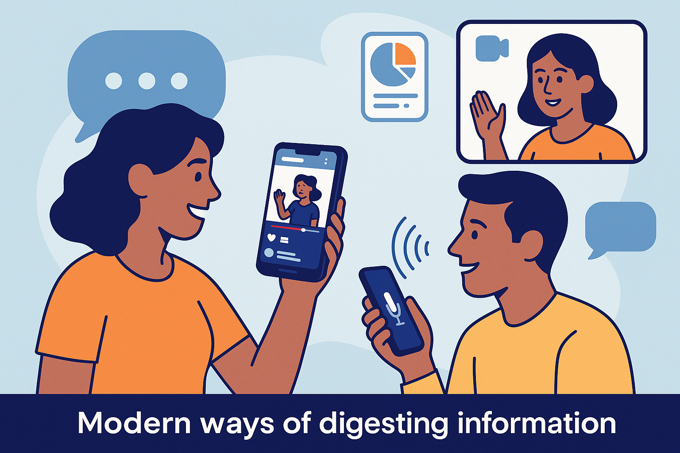
Our ways of understanding and sharing information have shifted dramatically — from reading long texts to embracing short, visual, and conversational formats. This blog explores the trends driving this change, real-world examples of modern communication in action, and why businesses (and their agreements) need to evolve too.
In today’s fast-paced world, the way we consume information has changed dramatically. Instead of reading long manuals or dense reports, we turn to short videos, infographics, podcasts, voice notes, and quick FaceTime calls. Communication has become shorter, more visual, and conversational, driven by convenience and our limited attention spans. With so much content competing for focus, people now prefer “snackable” updates like tweets, memes, or 30-second tutorials that deliver value instantly.
Just as important is the desire for human connection. Plain text often strips out tone and emotion, so we rely on emojis, GIFs, voice notes, and video chats to inject personality and feeling. A simple emoji or audio message can communicate warmth, urgency, or sarcasm far better than paragraphs of text. Modern audiences expect information to be quick, clear, and closer to real conversation—an expectation now shaping everything from our social feeds to the way businesses and legal agreements must evolve.
Not so long ago, consuming information meant reading books, articles, or long emails and sitting through presentations. Now, visual content reigns supreme. Social media feeds are dominated by images, short videos, and quick captions rather than walls of text. People process visuals much faster than text, making videos and graphics ideal for quick communication. A 15-second clip or a simple infographic can often explain something more clearly than a full page of words.
Short-form video has exploded. Platforms like TikTok, Instagram Reels, and YouTube Shorts deliver entertainment and education in bite-sized chunks, often under a minute. TikTok alone reached over 1.5 billion monthly users by early 2025, proof that billions prefer ultra-short, fast-paced content. These videos grab attention quickly with catchy visuals and sound, fitting perfectly with our rapid-scroll habits. Marketers have noticed too, with surveys showing short-form video now delivers the highest return on investment of any social format.
Beyond videos, quick-read visuals are everywhere. Memes can convey humour or commentary instantly, while infographics turn data into colourful, easy-to-digest charts. Even educators and news outlets use bullet points, images, and pull quotes to keep readers engaged at a glance. From fixing a leaky tap with a 3-minute YouTube tutorial to skimming an infographic about new software features, we’ve shifted from reading long explanations to learning visually in seconds.
This trend shows a wider cultural shift: from textbooks to TikToks, from memos to image summaries, we’re embracing brevity and clarity. Gen Z leads the way, preferring formats like short videos and voice notes that feel faster and more expressive. But older generations are adapting too as these formats become standard across devices. For businesses, the message is clear: swap long PDFs and jargon-heavy documents for visual, concise communication. Your customers, employees, and partners will thank you for making life easier.
While visuals have taken center stage, another big shift is the rise of voice and face-to-face interaction through technology. As traditional phone calls and voicemail declined, voice notes and video chats stepped in to fill the gap on our own terms. Voice notes are especially popular: around two-thirds of Americans send them, with Gen Z leading the way. They’re convenient, easy to record on the move, and carry tone and emotion text can’t match. Hearing someone’s actual voice – their excitement, sarcasm, or concern – makes communication feel more personal and clear.
Unlike live phone calls, voice notes don’t demand an instant reply. You can listen and respond later, keeping the human touch without the pressure. Nearly 40% of users even say voice notes have replaced phone calls. In workplaces too, quick voice memos via Slack or email are becoming normal, often making it easier to explain nuance or give instructions in minutes rather than pages of text.
Video calling has followed a similar path. Beyond scheduled meetings, spontaneous FaceTime chats are now common, especially for younger generations. For many teens and 20-somethings, “texting is out – FaceTime is in.” It feels natural to share a laugh, show something on camera, or just hang out for a few minutes. The pandemic cemented this habit across all ages, and research shows video calls create a stronger sense of presence than text or voice alone, deepening conversations and connections.
Everyday scenarios show why this shift matters: instead of writing a long email, you might send a joyful voice note to your family group chat, or a manager might record a 2-minute voice update for their team. Add in the rise of Siri, Alexa, and Google Assistant, and speaking to devices feels just as natural as typing. In summary, modern communication isn’t just visual – it’s vocal. Emojis and GIFs add flavor, but voice and video add soul, reminding us that communication is about connection, not just information. For businesses, education, and beyond, the lesson is clear: embrace voice and visuals to engage more effectively.
One of the biggest insights in modern communication is that people absorb information in different ways. Some are visual learners, others auditory, and some learn best by reading or doing. In the past, content was delivered in a one-size-fits-all format – like a text-only manual or a lecture with no visuals. Today, that’s changing fast thanks to multi-format or multimodal communication.
Multi-format learning means presenting ideas through text, images, audio, video, and interactive tools to suit different preferences and reinforce understanding. Research shows that using multiple senses – seeing, hearing, reading – boosts both comprehension and memory. If one explanation doesn’t click, another format often makes the idea “stick.” Engagement also rises, since you’re not zoning out on a wall of text but interacting with content in varied ways.
We see this shift everywhere. Classrooms mix textbooks with short videos, group discussions, and hands-on activities. Companies use e-learning modules where employees read key points, watch an animation, listen to a voiceover, and take a short quiz. This approach is more inclusive too: someone with reading difficulties may benefit from audio, while others prefer text summaries for reference. The result is training that speaks to everyone, not just one type of learner.
The media is doing the same. A science article might come with a video explainer, charts, and an audio interview alongside the text. Podcasts offer transcripts, and webinars share slide decks after the session. Businesses are following suit: some now provide agreements with a short video summary, a written overview, and visuals highlighting key points. Companies that adopt this see fewer questions and higher satisfaction, because customers understand the terms right away.
In practice, this shift prevents confusion. Imagine a bank sending a one-minute video with simple graphics and narration to explain new credit card fees, supported by a summary table and full terms. Customers are more likely to understand and fewer will call in confused – much like when plain-English rewrites of official letters cut queries by over 80%. The principle is simple: multi-format design ensures clarity, inclusivity, and trust. As expectations rise, people won’t settle for dense text alone – they’ll look for summaries, visuals, and interactive elements that help them digest information quickly and confidently.
Across society, we’ve embraced shorter, clearer, and more engaging formats, yet many businesses still rely on long emails, jargon-heavy reports, and dense contracts. This mismatch leads to confusion and complaints. In the UK, the Financial Ombudsman Service handles over 165,000 consumer complaints annually, with many decided in the customer’s favor because terms weren’t understood. Clearer, modern communication isn’t just good practice – it’s becoming a compliance and trust requirement.
Now imagine a modern approach: a bank provides a plain-language summary, simple visuals, and a short video explainer alongside full terms. Customers are far more likely to understand, reducing disputes and support calls. In fact, some companies have seen up to an 80% drop in inquiries after simplifying documents. Brevity and design don’t just improve experience – they save businesses time, money, and reputation.
These trends extend beyond contracts. Internal communications like policy updates or performance reviews can be transformed into short videos, infographics, or conversational Slack updates. Employees are more likely to engage with concise, visual formats than a ten-paragraph memo. The principle is simple: meet people where they are, using the same communication styles they already embrace outside of work.
Contracts and agreements are especially ready for change. Instead of static PDFs, imagine an interactive process that pauses to ask quick questions, uses icons and summaries, or offers a short video walkthrough. This turns agreements into a conversation rather than a formality, ensuring real understanding. Businesses that adapt will gain trust and reduce disputes, while those clinging to outdated methods risk being ignored or misunderstood.
 i agree
 i agree is a next-generation agreement platform that transforms outdated, text-heavy contracts into interactive, multi-format experiences. Instead of endless pages of jargon, users can:
This approach makes agreements feel like a conversation rather than a formality. It improves comprehension, reduces disputes, and creates a clear compliance record that regulators value.
Some real-world use cases for i agree include:
Across all these cases, the result is fewer disputes, stronger trust, and agreements that people actually understand. In short, i agree turns contracts from static text into clear, user-friendly, multi-sensory experiences built for the way we communicate today.
We’re living through a communication revolution. From bite-sized videos and voice notes to the way businesses now connect with us, one theme is clear: clarity, brevity, and human-centric design are winning. Long-form content won’t disappear, but to truly connect in marketing, education, or contracts, we need to use today’s language – visual, conversational, and interactive.
The rise of short-form content, visual learning, voice and video, and multimodal engagement all show that people want information that’s easy to consume and understand. When communication is clear, trust grows. When it isn’t, confusion and complaints follow. For businesses, adapting isn’t about being trendy – it’s about effectiveness. A contract people can actually understand will always perform better than one lost in fine print. Tools like i agree prove this shift is already happening, turning simple clicks into real moments of understanding.
As communication evolves, so must business practices. This means plain-language agreements, summaries, video explanations, and a focus on the reader’s experience over the sender’s convenience. The future is about simplifying, respecting people’s time, and meeting them where they are. Done right, agreements won
i agree’s guiding principles, including modern solutions and accessibility. i agree and how it works.People now prefer short, visual, and conversational formats like videos, voice notes, and infographics. Long, text-heavy documents are harder to engage with, as attention spans are shorter and expectations for clarity are much higher.
Traditional communications often rely on long text and jargon, which many people skip or misunderstand. This creates confusion, increases questions, and can lead to complaints when important information is missed.
Multi-format communication presents information through different formats like text, video, audio, and visuals. This helps people understand better because it matches different learning styles and reinforces key points in multiple ways.
Voice and video add tone, emotion, and clarity that text alone cannot provide. They make communication feel more human and help explain complex ideas more quickly, improving engagement and retention.
Businesses can use plain language, summaries, visuals, and short videos instead of long documents. Breaking information into smaller sections and making it interactive helps people engage and understand more effectively.
i agree reflect modern communication trends?
i agree uses video, audio, summaries, and interactive steps to turn agreements into engaging experiences. It aligns contracts with how people already consume information, making understanding easier and more natural.