Rising SRA reports show why client understanding matters
Contract News
Recent News
Reducing Disputes
20/05/2026
15 min read

26 August 2025
10 min read

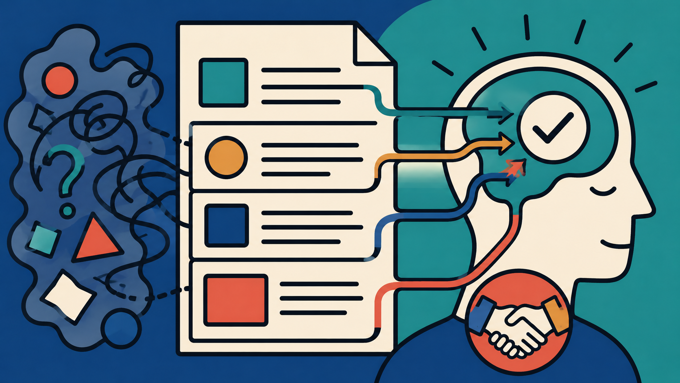
Misunderstandings are one of the most common triggers of customer complaints. When someone faces an unexpected fee or outcome they never anticipated, it’s often because they didn’t fully grasp the agreement they entered into. The details might have been buried in legalese or fine print. If information isn’t communicated clearly, the result is confusion, frustration and, too often, a formal complaint. In sectors like finance and legal services – where trust and compliance go hand in hand – unclear contracts aren’t just a minor hiccup; they’re a costly problem. The good news is that this problem is preventable. By using plain language and ensuring customers truly understand what they’re signing, businesses can dramatically reduce complaints and disputes.
This article takes a big-picture look at why clear, fair contracts lead to happier customers and fewer disputes. It also explores how  i agree represents the natural evolution beyond the traditional e-signature, built around fairness, real understanding, and staying ahead of regulatory changes.
Poor communication in contracts has serious consequences. Businesses spend enormous time and money dealing with complaints, chargebacks, and disputes that often stem from simple misunderstandings. For example, the UK’s Financial Ombudsman Service handles well over 165,000 consumer complaints a year, and roughly one in three cases ends up decided in the customer’s favor. Many times there is no intentional wrongdoing by the business – the issue is that the customer genuinely didn’t understand what they agreed to. Every complaint can trigger hours of internal work (investigations, calls, meetings, reports) and may invite regulatory scrutiny. Even beyond the official complaints, unclear terms drive customers away silently. In short, confusion is expensive. It leads to:
These costs pile up quickly – both in direct expenses like refunds and legal fees, and in hidden costs like lost future business. All of it often traces back to a root cause: a lack of client understanding. Preventing confusion at the outset is far cheaper than dealing with the fallout later.
The most effective way to reduce complaints is to stop misunderstandings before they happen. Clear, plain-language communication ensures that clients know exactly what they’re signing up for – which means fewer unpleasant surprises down the road. When people truly understand an agreement, they are far less likely to feel misled or blindsided, and thus less likely to complain. In fact, businesses that focus on making their contracts and disclosures user-friendly see concrete benefits:
Think about the last time you were unsure what a company’s terms really meant – it’s an uncomfortable feeling. Customers today appreciate and reward transparency. By using plain language, highlighting key points, and checking for understanding, companies turn confusing contracts into clear agreements. The result is not only fewer complaints, but also higher confidence and goodwill. Clarity upfront means less conflict later.
**Why misunderstandings happen so often:** It’s worth noting how we got here. Most people do not read lengthy terms and conditions in full – surveys have shown that over 90% of consumers accept agreements without reading them. This isn’t because customers are lazy; it’s because traditional contracts are practically unreadable to the average person. One study of hundreds of online contracts found that the vast majority (almost 99%) were written above the recommended reading level for consumers, essentially as dense as academic literature. In other words, even if customers try to read the fine print, they may not understand it. This gap between what businesses think they’ve communicated and what customers actually absorb is the heart of the problem. And it’s exactly the gap that plain language aims to close.
Importantly, ensuring customer understanding isn’t just good practice – it’s quickly becoming an expectation from regulators. In financial services, the UK’s Financial Conduct Authority (FCA) has introduced a new Consumer Duty that explicitly requires firms to take “reasonable steps to ensure customers understand” the products and services they sign up for. In the legal industry, solicitors’ regulators insist that lawyers explain things in ways each client can grasp, rather than hiding behind jargon. A recent landmark case (Belsner v Cam) highlighted that a client’s consent might not even be considered valid if the client didn’t understand the terms. Data protection laws like GDPR also stress that consent must be informed and clearly given, not buried in fine print.
The message is clear: a signature or checkbox is no longer enough on its own. Regulators want proof that customers were treated fairly – that key terms were explained, that the person knew what they were agreeing to, and that vulnerable clients were not left in the dark. If a dispute reaches an ombudsman or court, the firm that can produce evidence of clear communication and informed consent is in a much stronger position. Prioritizing understanding isn’t just about avoiding complaints; it’s a compliance safeguard and a legal defense. By making fairness and clarity part of your contract process now, you’re future-proofing your business for the rising standards of consumer protection. (In short: treating customers fairly by helping them understand is both the right thing to do and the smart thing to do.)
The rise of electronic signatures solved the logistical problem of getting documents signed – but it didn’t solve the understanding problem. A digital signature or an “I agree” button by itself only proves that a customer clicked a box or scribbled their name, not that they truly comprehended what was inside the PDF they scrolled past. As we discussed earlier, a signature alone can’t guarantee informed consent. This is where i agree comes in – as the next evolution beyond e-signatures, designed to prove not just that someone agreed, but that they understood.
i agree is built for fairness, understanding, and compliance from the ground up. Instead of presenting a dense document and hoping for the best, the platform guides the user through a clear, interactive consent journey. Here’s how it works in practice:
i agree actively checks. After key sections, the platform might ask the client to confirm (“Yes, I understand this fee”) or even capture the client’s verbal acknowledgement via their microphone or camera. For the final agreement, instead of a basic e-signature, the client gives a recorded spoken consent – essentially saying in their own words that they understand and agree. This verbal confirmation, recorded with a timestamp and the client’s identity verified, becomes powerful evidence of informed consent.Ultimately, i agree replaces the old “scroll, sign, and hope for the best” ritual with a modern, human-centered approach. It’s an agreement platform built on the principle that consent should be informed, not just captured. By leveraging video, audio, and interactive prompts, it meets people where they are – using tools they’re comfortable with – to make sure no one is left confused. (These design principles reflect i agree’s core philosophy of fairness and accessibility; see our Our Principles for more on the values behind the platform.) The result is fewer “I didn’t realize that” moments after the fact. Businesses using this kind of system report a sharp drop in complaints and “buyer’s remorse” disputes, because clients walk away from the agreement process feeling confident and informed.
Equally important, this approach keeps companies on the right side of regulators. Under many legal systems, a well-documented audio or video consent can be just as binding as a written signature – as long as you have proof of what was agreed and that it was voluntary. i agree was designed with strict compliance in mind, so that every step aligns with regulatory expectations (for details on specific laws and standards it meets, see our Legal & Compliance resources). In short, it doesn’t just collect a signature; it collects understanding.
Plain language contracts aren’t about dumbing things down – they’re about communicating effectively so that all parties are on the same page. When businesses respect their customers enough to ensure they understand the terms, everyone wins. Complaints fall, disputes dwindle, and relationships strengthen. What used to be a source of friction becomes an opportunity to build trust. In a world of ever-increasing information and oversight, clarity is not a luxury; it’s a necessity. It’s also a competitive advantage – companies known for fairness and transparency can stand out in any industry.
The future of agreements is already taking shape. Forward-thinking firms are moving beyond the old e-signature model toward processes that put understanding first. i agree is at the forefront of this evolution, turning complex agreements into clear conversations and proving that technology can make contracts more human. By embracing these changes, you’re not only reducing your complaint risk and meeting regulatory demands – you’re showing your clients that you value them. After all, an agreement should be a meeting of minds, not a contest of who can decipher the fine print.
It’s time to make sure that when a customer says “I agree,” they really mean “I understand.” Fewer problems – and a fairer, smoother experience for everyone – start with that simple but profound change. **
i agree’s four core principles (modern solutions, built-in accessibility, security by design, and compliance focus) which drive its fair and clear approach. i agree, how it works as a consent-first alternative to e-signatures, and what makes it different. i agree’s process (from video summaries and plain-language highlights to Q&A and recorded confirmations) that ensures informed consent.Unclear contracts often hide important terms in complex language or long documents. Customers may agree without fully understanding fees, obligations, or risks, which leads to confusion, frustration, and complaints when expectations are not met.
Plain language makes agreements easier to understand from the start. When customers clearly know what they are agreeing to, they are less likely to feel misled later, reducing complaints, chargebacks, and legal disputes.
Many contracts are written at a reading level far above what most people can comfortably understand. Combined with length and legal jargon, this makes it difficult for customers to fully absorb the terms even if they try.
Regulators increasingly expect businesses to prove that customers understood key terms before agreeing. Simply providing a document or collecting a signature is no longer enough to demonstrate fair and compliant communication.
E-signatures only show that someone accepted an agreement, not that they understood it. Without clear explanations and confirmation steps, customers may sign quickly without engaging with the content.
i agree improve informed consent?
i agree uses summaries, videos, audio, and confirmations to ensure customers understand key terms. It also records the process, creating evidence that the agreement was explained clearly and understood before acceptance.