Rising SRA reports show why client understanding matters
Contract News
Recent News
Reducing Disputes
20/05/2026
15 min read

16 September 2025
13 min read
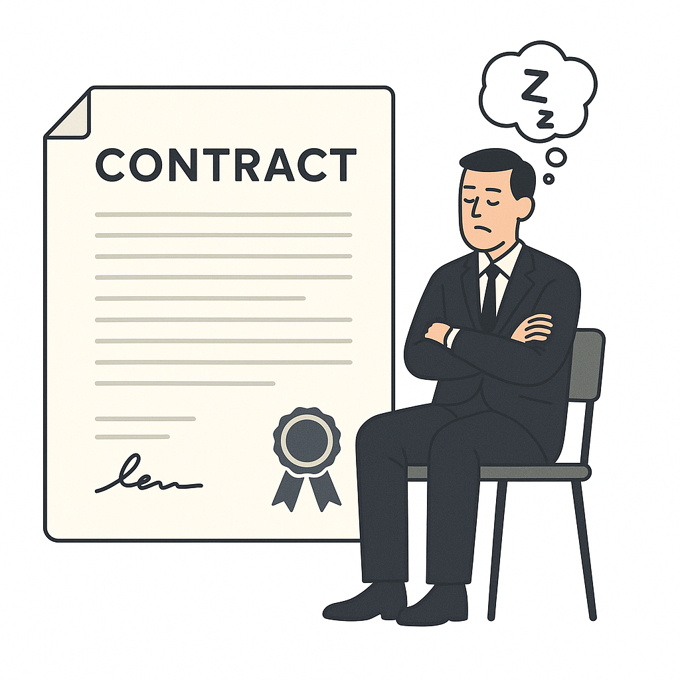
Ever clicked “I agree” on a contract or terms of service without reading a single word? You’re not alone. This common scenario highlights what we call the engagement deficit in contracts – the gap between how critical these documents are and how little people actually engage with them. Contracts are meant to spell out rights, obligations, and risks in business deals, employment, or consumer services. Yet in practice, most folks skim or skip them entirely. The result? Misunderstandings, disputes, and missed opportunities to build trust.
Why aren’t people reading something so important? In short: contracts are often long, complex, and daunting. Faced with pages of dense legal jargon, many signatories – from consumers to business clients – check out mentally. This low engagement is a big problem. If parties don’t truly understand an agreement, they’re more likely to run into conflicts down the line. They may also feel less trust toward the other side. For business owners and decision-makers, the engagement deficit isn’t just a theoretical issue; it has real costs and risks. In this blog, we’ll break down why contracts suffer from low engagement, what consequences that brings (from costly disputes to lost goodwill), and how addressing this deficit can pay off. In the end, we’ll see how  i agree offers a fresh solution to turn passive “I agree” clicks into active understanding.
i agree Can Bridge the Engagement GapThe first culprit behind the engagement deficit is simple: most contracts are too complex for the average reader. Legal agreements have a reputation for unwieldy sentences, archaic jargon (“heretofore,” anyone?), and tiny fine print. Studies confirm what we intuitively suspect – nearly all consumer-facing contracts are written well above an easy reading level. In one analysis of 500 online terms of service, over 99% were deemed “unreadable” by normal adults, with an average readability on par with academic journals. In fact, the typical agreement demanded more than 14 years of education to fully comprehend! No wonder people give up. For context, experts recommend aiming for an eighth-grade reading level for general consumer materials, but almost none of these contracts met that mark.
Length is another part of the problem. Contracts and policies often span dozens of pages or thousands of words. One famous calculation found that if the average person actually read every privacy policy or terms-of-service they encountered in a year, it would take around 250 hours of reading – that’s like devoting six full work weeks just to fine print. It’s simply not practical. Faced with such a time sink, even diligent readers will skim at best. This phenomenon is sometimes dubbed “the biggest lie on the internet” – people click “I agree” by the millions, but almost nobody truly reads or processes the content.
Cognitive science helps explain why complexity kills engagement. Huge blocks of text and legal mumbo-jumbo cause cognitive overload: our working memory gets overwhelmed, and we shut down. There’s also decision fatigue at play. By the time someone reaches a contract – say, after shopping on a website or negotiating a deal – they’ve already made numerous decisions. Their brain is looking for a shortcut, and the easy path is to assume the contract is standard and just sign it. Many also feel they have no real choice (“If I want this service, I have to accept these terms”), which saps any motivation to read closely. All these factors create a perfect storm where even high-stakes documents are often left unread. In short, the complexity barrier turns contracts into walls of text that invite avoidance rather than engagement.
It’s ironic: contracts carry serious weight – they’re legally binding and enforceable – yet engagement with them is abysmally low. The vast majority of people sign documents without fully reading or understanding them. Surveys and studies continually back this up. For example, a Deloitte survey found that about 91% of consumers admit to consenting to terms and conditions without reading a word. Among younger adults, the rate was even higher (almost 97% for those 18–34). Another recent study in the UK revealed that roughly two-thirds of people don’t read or can’t comprehend the contracts they sign for common services. This isn’t due to laziness or apathy – it’s a predictable reaction to the complexity and length we discussed above, combined with a feeling that “reading won’t change the outcome.”
Real-world experiments have dramatically illustrated this low-engagement habit. In a controlled study, researchers set up a fake social networking site with a lengthy terms-of-service agreement. Buried within the text was a clause offering up the user’s first-born child as payment for using the service. The result? 98% of participants clicked “Join” and agreed – oblivious to the outrageous condition. Only a tiny fraction even glanced at the terms, and none caught the bizarre clause. Similarly, a public Wi-Fi hotspot experiment in London snuck in a clause where users unwittingly agreed to give up their firstborn child in exchange for free Wi-Fi. People still clicked “I agree.” These tongue-in-cheek stunts prove the point: when confronted with a wall of text, almost everyone will assume it’s the usual legal boilerplate and hit accept, no questions asked.
The phrase “high stakes, low engagement” sums up this paradox. We’re dealing with documents that can determine who owes what, who bears risk, or what happens in a dispute – clearly high stakes for all parties. Yet engagement is so minimal that signatories might not even know what they’ve agreed to. The legal system, for the most part, doesn’t cut slack for not reading; courts often hold parties to the terms regardless of whether they read them. So the stakes are real, but the behavior doesn’t match. This gap can lead to nasty surprises (“Wait, what do you mean there’s an auto-renewal fee?!”) and a sense of betrayal once the hidden terms come to light. In essence, the engagement deficit means people treat serious contracts as mere formalities to click through, which is a risky way to do business.
What happens when someone signs a contract they haven’t engaged with? At best, they muddle through; at worst, serious misunderstandings arise. A contract filled with terms that one party didn’t truly grasp is a ticking time bomb for disputes. Consider the common scenario of a customer who feels overcharged or a client who didn’t realize a certain policy applied – they often protest, “I didn’t know that was in the contract!” From the business’s perspective, it might have been there in black and white, but if the customer never absorbed it, conflict ensues. Complaints, refund demands, chargebacks, and even lawsuits can spring from these misunderstandings. In many cases, there’s no intentional bad faith by either side – the issue is simply that the person didn’t fully understand what they were agreeing to.
Statistics from complaint handlers and regulators underscore this point. The UK’s Financial Ombudsman, for example, logs hundreds of thousands of consumer complaints each year across finance and insurance. A significant chunk of these are upheld in the customer’s favor, often not because the firm violated the agreement, but because the customer genuinely never understood the terms or implications. In other words, unclear communication and low engagement planted the seeds of the dispute. Similarly, industry research indicates that ambiguous or hidden terms are a leading cause of contract conflicts. One global contracting study found that ambiguous contract language and misaligned expectations are among the top root causes of disputes between businesses. When each side has a different interpretation of what a clause means (or one side wasn’t aware of it at all), a clash is almost inevitable.
The costs of these misunderstandings can be huge. Even a single small misunderstanding – say, a client missing a cancellation deadline tucked in paragraph 42 – can snowball into a formal complaint or legal case. That means hours of staff time spent on emails, meetings, and damage control. If lawyers get involved, legal fees rack up quickly. For businesses, there’s also the risk of regulatory action if authorities believe the communication was unfair or misleading. In extreme situations, a court might even rule that a particularly opaque or convoluted term is unenforceable (especially in consumer contracts where the law frowns on “unfair terms”). At a minimum, though, a misunderstood contract means the business relationship has taken a hit. The client or customer feels misled, and the business is now on the defensive. All of this because engagement with the contract was low at the outset.
Every contract is not just a legal document – it’s also an opportunity to build trust between the parties. When you present an agreement in a clear, transparent way and ensure the other side really understands it, you’re sending a message: “We have nothing to hide, and we respect you enough to make this clear.” That can significantly boost trust and goodwill. Unfortunately, the engagement deficit means most businesses miss this opportunity. Instead of using contracts as a chance to strengthen relationships, many contracts inadvertently erode trust. Think about it: if your customer or partner finds the agreement too convoluted to grasp, they may already harbor a slight suspicion (“What are they trying to hide in here?”). If later they encounter a surprise in the fine print, that suspicion turns into full-blown distrust (“They tricked me!”).
The cost in loyalty can be severe. Modern consumers, especially, value transparency highly – and reward it. In fact, research shows an overwhelming majority of consumers are more likely to stay loyal to a brand or provider that commits to full transparency in its communications and contracts. One widely cited survey put this figure at about 94% of consumers: nearly all will remain more loyal to a company that’s open and clear. On the flip side, when customers feel a company isn’t upfront, many will walk away at the first negative experience. There’s a classic finding that about 86% of people will stop doing business with a company after a single bad customer experience, and confusing or sneaky contract terms definitely count as a bad experience. Even if they don’t leave immediately, unhappy customers are unlikely to recommend you – they might even warn others away.
For business owners, this means the engagement deficit isn’t just causing potential disputes – it’s silently chipping away at your brand reputation. Imagine a client who quietly complies with a confusing contract now, but decides not to renew next year because they felt uneasy or disrespected by the process. Or consider the partner who signs a complex contract but then hesitates to deepen the relationship, lacking trust. In contrast, if you flip the script and deliver contracts in plain language, with key terms highlighted and explained, you signal integrity. Clients who clearly understand what they’re signing are more confident and comfortable. They’re more likely to view you as a trustworthy partner. Over time, that translates into repeat business, referrals, and a positive brand image. In short, clear contracts can actually be a competitive advantage – a chance to earn goodwill – whereas confusing ones are a missed opportunity that often drives people away.
Beyond the direct risks of complaints or lost clients, low engagement with contracts creates a lot of inefficiency in organizations. Consider how much time and resources get wasted because of avoidable confusion. Sales and account managers have to spend extra time hand-holding clients through terms that weren’t clear initially. Customer support lines light up with callers asking, “Can you clarify this part of the contract for me?” or worse, demanding remedies for something they “didn’t know” was in the agreement. Each misunderstanding can trigger a back-and-forth chain of emails, internal investigations, or emergency meetings to smooth things over. All of that is productivity lost – staff could be focusing on growth and service, but instead they’re firefighting issues that proper communication would have prevented.
The engagement deficit also means slower deals and more friction in getting agreements signed. When a contract is convoluted, it often leads to protracted negotiations or hesitancy. Prospective customers might ask for more time to “let their lawyer look at it” or come back with numerous questions. Every extra cycle delays the deal and increases the cost of customer acquisition. There’s evidence that unclear agreements lengthen the sales process due to the extra back-and-forth. Simply put, complexity and lack of clarity make doing business less efficient. In some industries, especially where contracts are complex by nature (think long-term supply contracts or construction projects), this can be quantified. Research by contract management associations has found that on average about 9% of all contracts end up in some sort of dispute or claim. In certain sectors like construction, the rate is over 20%. Each dispute represents countless hours of management time, legal fees, and distraction from core business.
Even if a misunderstanding doesn’t escalate to a formal dispute, it often imposes hidden costs. For example, if your firm has a pattern of unclear communications, you might see higher insurance premiums or need to budget more for legal expenses, anticipating things will blow up. Regulatory scrutiny can intensify, leading to frequent audits or reporting requirements if you gain a reputation for customer confusion. All of these operational drags act like sand in the gears of your business. Conversely, when contracts are clear and clients engage with them properly, operations run more smoothly. There are fewer surprise blow-ups to handle, fewer “urgent clarification” calls, and generally more predictable relationships. Efficient, well-understood contracts mean both parties are on the same page from the start, greatly reducing the administrative burden of managing the agreement over its life cycle.
i agree Can Bridge the Engagement GapSo, how do we fix this engagement deficit? The key is to make the contract process itself more engaging, understandable, and user-friendly. This is exactly the mission of i agree. Instead of relying on dense PDFs and blind signatures, i agree transforms agreements into a guided experience designed for clarity. It uses plain-language summaries, visual aids, and even multimedia elements like video or voice explanations to break down complex terms into digestible pieces. Importantly, it doesn’t just present information – it actively involves the reader. Throughout an i agree agreement, users might confirm their understanding of key points or answer a quick question to proceed, turning a passive reading exercise into an interactive conversation. This aligns with known cognitive science principles: when people engage actively (hear information out loud, see it in multiple formats, and respond to it), they retain it much better than when they just scroll through static text.
The result of using a platform like i agree is that by the time someone finishes “signing” the contract, they’ve essentially been walked through every important term and have demonstrated their understanding. Nothing sneaks by unnoticed. This dramatically lowers the chance of the dreaded “I had no idea that was in there!” moment down the road. In practice, businesses that adopt i agree report far fewer customer complaints and almost no disputes stemming from misunderstandings. After all, if a client has clearly been shown a fee or a policy during the agreement process (and perhaps even explicitly acknowledged it), it’s unlikely to become a flashpoint later. And if it does, the company has a secure audit trail proving that the term was communicated and understood – a powerful defense tool.
i agree essentially turns contracts from one-way documents into two-way dialogues. It bridges the engagement gap by making the agreement process feel less like a chore and more like a collaborative understanding. Instead of a customer hurriedly clicking “agree” out of impatience, that customer spends a few extra minutes truly grasping what they’re signing – and feeling good about it. They leave the process with greater confidence and trust in the business. For the business, this means stronger relationships, improved compliance (regulators love to see that customers are well-informed), and significant savings in time and money that would otherwise go into handling conflicts. It’s a classic win-win. By investing a bit in better communication up front, i agree helps companies avoid paying the much higher price of confusion later. In short, it offers a way to finally close the engagement deficit in contracts – ensuring that “I agree” really means “I understand.”
i agree: Our Principles – outlines the core values (clarity, inclusivity, security) behind the platform’s design. i agree: Frequently Asked Questions – answers common questions about how the process ensures clear, informed consent. i agree: Reduce Complaints and Disputes – shows why clear communication is your best defense against complaints and regulatory risks. i agree: How It Works – describes the step-by-step process (plain language summaries, videos, confirmations) that turns agreements into understanding. i agree’s approach to improving contract comprehension.The engagement deficit is the gap between how important contracts are and how little people actually engage with them. Many people sign or click agree without reading properly, which means they may not understand key terms, risks, or obligations.
People avoid reading contracts because they are often long, complex, and full of legal jargon. Dense wording, small print, and information overload make contracts feel intimidating, so many people skim, skip, or rely on assumptions.
Low engagement can lead to misunderstandings, complaints, disputes, and loss of trust. If someone does not understand fees, cancellation terms, or responsibilities, they may later feel misled, even if the terms were technically included.
Better engagement shows people that key terms are not being hidden. Clear summaries, simple explanations, and interactive prompts help users feel informed and respected, which strengthens trust before the agreement is completed.
Businesses can improve engagement by using plain language, shorter sections, visual aids, video or audio explanations, and confirmation steps. The goal is to make contracts easier to understand, not just faster to sign.
i agree solve the engagement problem?
i agree turns contracts into guided experiences. It explains key terms clearly, uses multimedia where helpful, captures confirmations, and creates an audit trail showing that the person engaged with and understood the agreement.