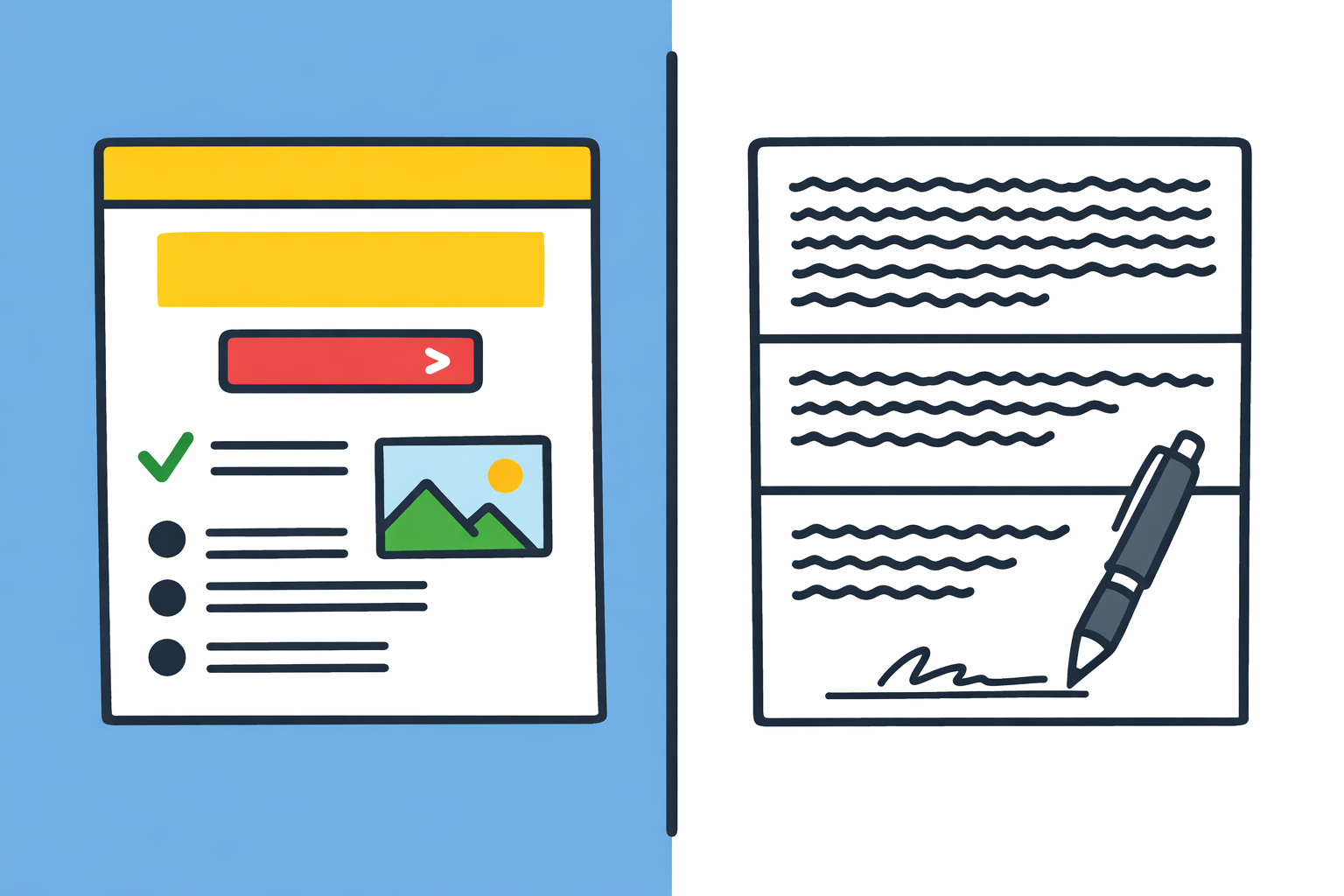

Most onboarding conversations focus on one thing: how many users make it through. Teams obsess over completion rates, drop-off percentages, time to onboard, and cost per onboarded customer. Those numbers do matter for efficiency. But they hide a much more expensive problem: the downstream costs of misunderstanding. Very few teams stop to consider how much money and time they spend after onboarding fixing miscommunications, handling disputes, responding to complaints, or dealing with regulators and ombudsmen. By the time those costs show up, it’s already too late – the damage is done and the blind spot has hit your bottom line.
What this blog contains
- Onboarding is where disputes are born
- The hidden cost no one tracks
- One small change at the start reduces friction later
- Optimising for the wrong outcome
- How
 i agree fixes the onboarding blind spot
Onboarding is Where Disputes Are Born
Disputes and complaints rarely start at the moment of conflict – they start at the moment of agreement. A customer ticks a box, a document is signed, a process is “completed,” and everyone assumes understanding. Months later, when something goes wrong, the customer doesn’t say “Well, I agreed to all this.” They say:
“I was never told.”
“I didn’t understand.”
“That wasn’t explained.”
In that moment, your beautifully optimized onboarding funnel has already failed. The customer may have technically agreed, but they didn’t truly grasp what they agreed to. The truth is that if your onboarding only confirms a signature or a checkbox – and not actual understanding – it’s planting the seeds for future disputes. Misunderstandings that originate during onboarding lie dormant until reality diverges from the customer’s expectations. When the surprise charges appear or the restrictions surface, the conflict begins. By then, the relationship is already strained and costly damage control is the only option. The root cause was there from day one: onboarding that checked a box but didn’t check for understanding.
The Hidden Cost No One Tracks
Most businesses can tell you their customer acquisition cost and maybe how many users complete onboarding, how long it takes, and other efficiency metrics. Very few can tell you how much “onboarding debt” they accumulate – the time and money spent later because customers were not fully informed up front. These hidden costs often live in different departments, so they never get traced back to a rushed or unclear onboarding experience. Consider the stark difference:
- How much it costs to acquire a customer
- How many users complete onboarding
- How long onboarding takes per customer
versus
- How much staff time is spent handling disputes and complaints from customers
- How many of those complaints trace back to misunderstood terms or unmet expectations set during onboarding
- How much legal, regulatory or ombudsman intervention is triggered (and what it costs annually)
- How much trust and future business is lost every time a customer feels misled
The second list is largely invisible in onboarding discussions. These costs show up in customer support queues, compliance reviews, legal fees, and churn reports – not on the onboarding dashboard. For example, the UK’s Financial Ombudsman Service received roughly 165,000 new complaints in the last reported year, and about one in three were resolved in the customer’s favor. In many cases there was no intentional wrongdoing by the business – the issue was that the customer genuinely didn’t understand what they had agreed to. In other words, a significant chunk of disputes stem from miscommunication or lack of clarity at the agreement stage, not malice or bad products.
Every formal complaint carries a price tag. Even a single dispute can demand hours of internal work – fact-finding, emails, calls, manager approvals, writing reports – not to mention potential refunds or legal expenses. And for each customer who goes through the trouble to complain, there are many more who quietly feel wronged and simply walk away. Studies show that only around 8% of unhappy customers actually file an official complaint; the rest may just stop doing business with you. That means your “complaint count” is the tip of an iceberg. The hidden part below the water is all the silent attrition and negative word-of-mouth. (An average dissatisfied customer might tell two dozen others about a bad experience.) All of this is incredibly expensive in aggregate – one analysis estimated poor customer service and complaint handling costs UK businesses tens of billions of pounds each year. These losses don’t show up immediately in your onboarding stats, but they are direct fallout from onboarding mistakes. If a customer feels confused or misled from the start, you pay for it later in support costs, regulatory headaches, and lost lifetime value.
The irony is that these costs are preventable. They all trace back to a common root cause: a lack of customer understanding. Yet because they manifest long after the initial signup, it’s easy for organizations to overlook the connection. Support teams chalk it up to “difficult customers,” compliance teams treat it as a cost of doing business, and so on. The onboarding team rarely hears, “We’re spending hundreds of hours on disputes because customers never really understood our terms.” But that is the blind spot reality. By not making sure the customer truly understands what they are signing up for, the business is incurring a kind of debt – an onboarding debt – that will eventually come due with interest.
One Small Change at the Start Reduces Friction Later
What’s the fix for this costly blind spot? It’s not adding more pages of fine print, longer contracts, or forcing customers to scroll more. It’s also not expecting people to suddenly start reading dense legal terms word-for-word. The real solution is much simpler: make understanding visible and explicit from the very beginning. In practice, this means slowing down just enough during onboarding to clearly explain what matters, in plain language, and in formats people actually engage with. Instead of assuming a checkmark means comprehension, you design your onboarding to leave little doubt that the customer knows what they’re agreeing to.
By making a small investment of effort at the start, you remove massive friction later on. Clear, user-friendly communication up front yields:
- Fewer “I didn’t realize...” conversations: When key terms and implications are explained clearly, customers are far less likely to be surprised later. They won’t call support claiming “No one told me about X fee” because you did tell them and made sure it clicked.
- Fewer escalations and disputes: If expectations are properly set and documented, there’s less basis for a formal complaint. Misunderstandings won’t escalate to chargebacks, regulator involvement, or legal threats because the customer was informed and acknowledged it.
- Greater trust and smoother relationships: Customers feel respected when you take the time to ensure they understand. That builds goodwill. Even if an issue arises, a customer who remembers your honesty is more likely to work it out amicably instead of assuming bad faith.
Making understanding an objective might add a few more minutes or an extra step to the onboarding flow, but it saves exponentially more time and money down the road. The goal is not to inundate users with more text, but to communicate the important points in a way that truly lands. That could mean writing in plain English instead of legalese, highlighting the critical facts (fees, deadlines, cancellation terms) in bullet points or visuals, and providing a quick summary or video that distills the fine print into something digestible. It also helps to give customers an opportunity to confirm their understanding – for example, having them answer a couple of key questions, or click to acknowledge a short summary of the top things they need to know. Some forward-thinking companies even use interactive methods like a brief quiz or an audio walkthrough of the agreement, turning the passive “scroll and sign” into an active learning moment. The overarching principle is simple: onboarding should not just prove that someone agreed; it should prove they understood.
Optimising for the Wrong Outcome
If your definition of “onboarding success” is only a fast completion with minimal clicks, you might be optimizing for speed at the expense of safety. A frictionless signup that leaves customers in the dark is a recipe for regret (theirs) and fallout (yours). The real question to measure is: did this customer actually know what they were agreeing to? If the answer is “not really,” then that onboarding was not truly successful – no matter how quick or conversion-friendly it looked.
Every dispute, complaint or regulatory issue you wrestle with later is essentially onboarding failure coming back to haunt you. Think of it as technical debt in software: rushing something out the door without proper quality leads to bugs and maintenance headaches later. Similarly, rushing customers through agreement steps without ensuring understanding leads to “onboarding debt” that will eventually come due. And when it comes due, it often costs far more than the few minutes you thought you saved upfront. We’re seeing regulators start to take notice of this too. In finance and other industries, new rules (like the UK’s Consumer Duty) explicitly require firms to take “reasonable steps to ensure customers understand” what they’re signing up for. Likewise, legal industry guidance stresses that a client’s consent isn’t valid if they didn’t comprehend the terms. In plain terms, a checkbox or e-signature alone isn’t enough anymore – you need evidence that the customer was informed in a way they could actually understand.
Optimizing solely for a speedy onboarding funnel is optimizing for the wrong outcome. It produces a nice conversion metric, but at what cost? If 100% of users breeze through onboarding in 2 minutes, but six months later a chunk of them are filing complaints or feeling misled, was that really a win? A truly effective onboarding optimizes for clarity and consensus, not just clicks. It seeks to align the customer’s expectations with reality. That may mean your “time to onboard” metric goes up slightly, but your time spent handling disputes plummets. Given the choice, any business leader would prefer a few extra minutes upfront to hours of damage control later. In the long run, aligning onboarding with understanding isn’t just a customer-friendly move – it’s a strategic, cost-saving decision. It turns a potential legal landmine into an ongoing trust-building exercise. The companies that recognize this are shifting their priorities from “get them in the door fast” to “make sure they know what’s behind the door.”
How i agree Fixes the Onboarding Blind Spot
Addressing this blind spot requires tools and processes that prioritize informed consent over speed. This is exactly the problem i agree was designed to solve. i agree is an onboarding solution that ensures when a customer says “I agree,” they genuinely understand what they’re agreeing to. It transforms the traditional checkbox or e-signature process into a more transparent, interactive experience without creating extra hassle for the user.
How does it work in practice? Instead of dumping a wall of text and hoping for the best, i agree delivers the key points of an agreement in a way that’s clear and engaging. For example, customers might watch a short, personalized explainer video or audio that walks them through the most important terms in plain language. Complex clauses are translated into simple explanations, and crucial details are highlighted visually so nothing important hides in the fine print. The platform can even prompt users to confirm understanding of specific items – for instance, by having them verbally repeat a critical statement or answer a quick yes/no question about a core term. All of these steps are logged, creating an audit trail that shows exactly what the customer saw and acknowledged.
This approach does two big things: First, it greatly increases the customer’s actual comprehension. They aren’t just mindlessly clicking “agree” – they are hearing, seeing, and actively affirming the key facts. Second, it creates tangible evidence that the customer was informed. If a dispute ever arises, you’re not stuck with a he-said-she-said situation. You can point to a recorded confirmation (even a video or audio of the customer saying “I understand and agree to X, Y, Z”) as proof that the terms were clearly communicated and accepted. That is a powerful deterrent to frivolous complaints and a strong defense if a genuine complaint reaches a regulator or court.
By making the agreement process more human and transparent, i agree essentially turns traditional onboarding on its head. It slows the user down just enough to ensure they’re not missing something important, but it does so in a user-friendly way. The result is that customers complete onboarding not only “successfully” in the conventional sense, but with the confidence that they know what they’ve signed up for. They appreciate the clarity (many customers report that plain-language and interactive explanations actually increase their trust in a company). And your team can breathe easier knowing that you’re far less likely to get that angry call of “I was never told about this!” down the line.
In short, i agree helps make sure that an I agree truly means I understand. It closes the comprehension gap that causes so many disputes. For organizations, this means fewer complaints and faster, fairer resolutions of any issues that do arise. For customers, it means a smoother experience with no nasty surprises. It’s a classic win-win, achieved simply by doing what we should have been doing all along – treating informed consent as the real goal of onboarding. If you’re interested in eliminating onboarding-related disputes and building greater trust from day one, fill out our contact form to reach out and learn more about how i agree can help.
- Informed Consent – understanding beyond signatures
- Context Contracts – how providing context improves understanding
- Consumer Understanding – why it reduces disputes and complaints
- Future of Agreements – voice and video consent in onboarding
- How i agree works – making consent audible and visible
- Deloitte Survey – 91% of consumers don’t read terms and conditions (Business Insider)
- Financial Ombudsman Data – Annual complaints figures and uphold rates (2022/23)
- Cost of Complaints – study on hidden costs of poor complaint handling (£37bn/year in UK)
- Legal Ombudsman Research – most legal complaints are caused by communication failures and delays