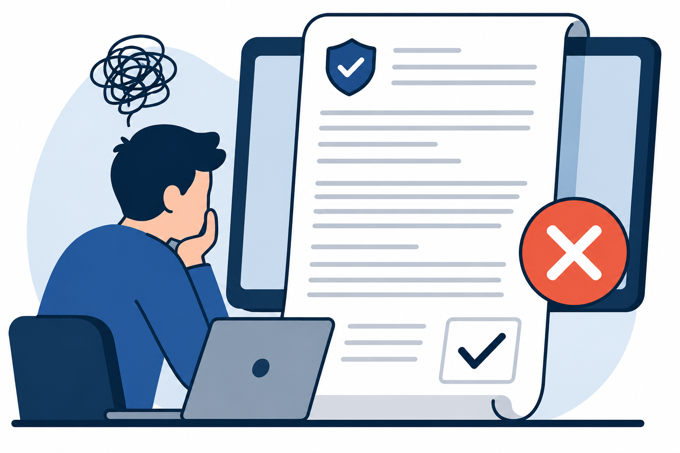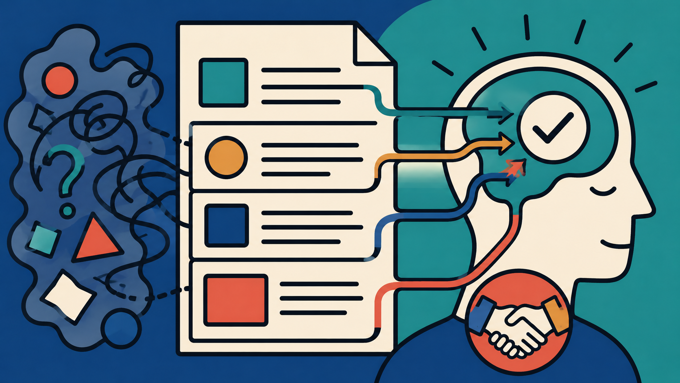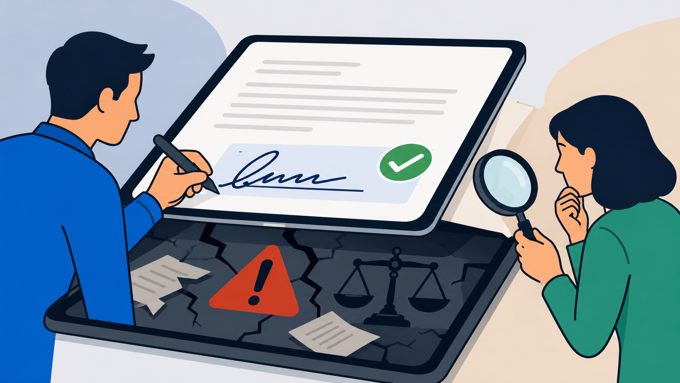
Why every e-signature could soon be contestable
e-Signatures
Future of agreements
Legal disputes
19/05/2026
13 min read

12 January 2026
27 min read
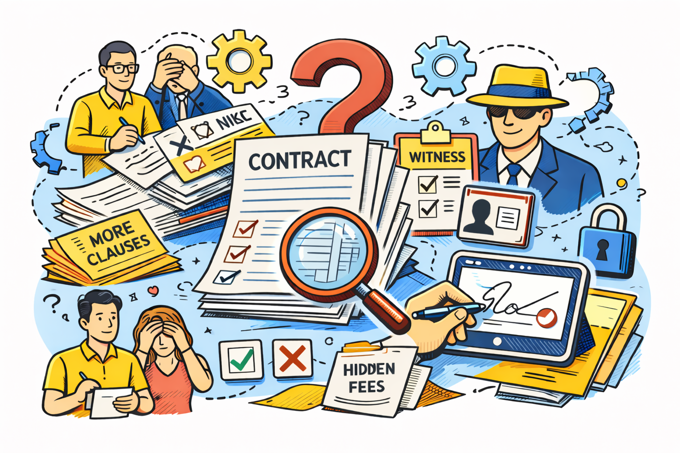
Contracts are supposed to create clarity and trust. Yet modern business agreements have evolved into unwieldy documents full of added steps and legalese – all in an attempt to fix problems that these very fixes often fail to solve. Instead of improving understanding, we’ve doubled down on processes that give only the illusion of safety. From requiring initials on every page to adding witnesses and endless clauses, each practice is built on a well-meaning assumption. In reality, these measures usually add complexity or bureaucracy without addressing the core issue: most people still don’t truly understand what they’re signing. The result is a system of agreements that looks more robust on the surface but remains fundamentally broken in practice.
The following explores nine common contract practices – the assumptions behind them, what we do to try to mitigate risk, and why they ultimately fall short. We’ll also look ahead to a better way of making agreements that focuses on genuine understanding, not just ticking boxes.  i agree that the future of agreements can work a lot better for everyone involved when we challenge these broken assumptions.
What this blog contains:
The assumption: If someone initials each page of a contract, it proves they have read that page. The idea is that the extra effort of initialling every page will force readers to pay attention.
What we do: Contracts often require the signer’s initials on every page (in addition to a signature at the end) as a way to acknowledge each page’s content.
Why it still fails:
Result: Requiring initials on every page adds more administrative hassle but achieves the same lack of understanding. It creates a false sense of security that “every page was acknowledged,” when in reality the signer might be as clueless about the content as if they had only signed once.
It’s telling that studies consistently show a majority of consumers do not fully read or grasp what they sign. In one UK survey (2023), 68% of people admitted they either don’t read contracts or don’t understand them fully – with 13% saying they “hardly” or “never” read the fine print at all. Meanwhile, a Deloitte study in the U.S. found 91% of people consent to terms of service without reading a single word, and among younger adults the rate was even higher at 97%. Those eye-opening statistics confirm that an extra initial on each page doesn’t change the fundamental behavior. People are still signing (and initialling) documents they haven’t truly read, simply because the system expects it of them.
The assumption: Having a contract witnessed by a third party will validate the identity of the signer and the integrity of the signature. In theory, a witness adds credibility – they’re supposed to be a neutral observer who later can swear “Yes, John Doe signed this document willingly in front of me.”
What we do: We add a line for a witness signature (and often their name and address) on important documents. The witness is meant to watch the signing and then sign themselves to confirm it was properly executed.
Why it still fails:
Result: We end up with a false sense of security layered onto weak evidence. Everyone feels better because a “witness” was involved, yet if the signature’s validity is later challenged, the witness often contributes little. They might not recall the event, might be uncontactable, or their credibility could be questionable (since they might be a friend or employee, not truly independent). In essence, the witness requirement in many contracts is just more paperwork that rarely gets tested – and when it is tested, it’s not the rock-solid proof we’d hope for. (Notably, for certain legal documents like deeds, witnesses are required by law – but even then the same weaknesses apply unless the process is very rigorously managed.)
It’s also worth noting the contrast with modern digital methods: for example, an electronic signature platform can record an audit trail (IP addresses, timestamps, etc.) to verify identity better than a hurried scrawl from a so-called witness. Yet many businesses still trust the old witness signature ritual without ensuring any real verification. The bottom line is that a witness signature often adds bureaucracy without truly increasing trustworthiness.
The assumption: If people are uneasy about electronic agreements, making the online signing process mimic old paper formalities will increase trust. In other words, we try to copy the look and feel of pen-and-paper signing in a digital environment, hoping it reassures users that the process is just as legitimate.
What we do: We implement rigid signing workflows in e-signature software. For example, we may force users to click through each page of a PDF, maybe even “initial” electronically, and confirm multiple times that they agree. We add pop-up warnings like “Are you sure you have read the document?” before allowing them to apply a digital signature. Essentially, we transplant all the formal steps of paper signing into the online world.
Why it still fails:
Result: We often get the worst of both worlds: the cumbersome feel of paper contracts now translated into a clunky online experience. Instead of leveraging the benefits of digital (like searchability, interactive explanations, or quick navigation), many e-contracts are literally just scanned paper forms or static PDFs thrown onto a screen. The user is expected to read a 30-page PDF on a phone and dutifully click all the right boxes. Not surprisingly, understanding doesn’t improve – but frustration might. We’ve basically recreated the old problems (unreadable contracts, blind agreement) in a new medium, with extra clicks to boot.
Some dramatic real-world examples highlight how ineffective these measures are. In one famous April Fool’s experiment, an online game retailer slipped a clause into its digital terms claiming the purchaser’s immortal soul as payment. That day, 7,500 customers agreed to the terms and not a single one clicked the opt-out link to save their soul – proving nobody truly read the text. Similarly, a software company hid a $1,000 prize offer deep in its end-user license agreement. It took over four months and more than 3,000 downloads before someone finally noticed and claimed it. These stunts illustrate that no matter how many confirmations or pages to initial, users on digital platforms will click “agree” without reading if the process doesn’t actively engage or inform them.
The assumption: If people keep misunderstanding or disputing contract terms, the solution must be to add even more detail and clauses to cover every possible scenario. The thinking is that a longer, very comprehensive contract will prevent any “wiggle room” or ambiguity, thereby heading off future conflicts (“it’s all in the contract!”).
What we do: We expand contracts incessantly. Over time, agreements grow from a simple 3-page document to a 30-page monster. Every time an issue or dispute occurred in the past, a new clause gets tacked on for next time. Lawyers insert highly specific language and multiple sub-clauses, trying to anticipate all conceivable circumstances. The contract ends up covering an exhaustive list of “if X then Y” conditions, exceptions, definitions, and legal boilerplate to make it bulletproof.
Why it still fails:
Result: We get longer and longer documents that fewer and fewer people actually read. The irony is that in trying to prevent disputes by detailing every scenario, we may actually be causing more disputes or resentment. Customers later say, “I had no idea about X term,” and technically it’s there on page 19, but who realistically saw it? One might argue the business protected itself legally by including it, but if almost no one understands the agreement, it’s a pyrrhic victory. We’re essentially writing contracts that succeed on paper (from a legal CYA perspective) but fail in practice because they don’t achieve a meeting of the minds with the customer.
Consider that some popular online services now have terms of service so extensive that it would take an average person over an hour (or even two) to read them in full. For example, a major social media app’s terms can run 7,000+ words, and an e-commerce platform’s combined user agreement and privacy policy can exceed 30,000 words. It’s fantasy to think users will parse these entirely. So adding clause upon clause has not made things clearer – it’s made the core points harder to find and ensured that most users click “agree” without true understanding. More detail does not equal more clarity when human attention is a finite resource.
The assumption: By moving all the nitty-gritty details (technical terms, fee tables, legal definitions, etc.) out of the main body of the contract and into schedules or annexes, we make the primary agreement simpler and clearer. In theory, separating the details keeps the main contract clean and digestible, and anyone who wants the fine print can find it in the appendix.
What we do: We take key terms and put them into attachments at the end of the contract (often labeled “Schedule A,” “Annex 1,” “Exhibit B,” etc.). For instance, a software license agreement might have the pricing and support terms in Schedule 1, or a loan contract might have all the definitions and formulae in an annex. The main document then references these schedules (“per the rates set out in Schedule A”) but doesn’t display them up front.
Why it still fails:
Result: The risk is not eliminated; it’s simply hidden. Businesses might think they’ve made the contract more user-friendly by offloading details to the back, but unless they actively ensure people look at and grasp those schedules, it’s a cosmetic fix. All too often, a customer will sign an agreement with a false sense of security, only to be unpleasantly surprised when an annexed term comes into effect. That leads to the familiar scenario: “It was in the contract, in the schedule on page 47,” says the company – and the customer responds, “Well, I never saw that!” In the end, pushing key terms out of sight can create as much friction as it avoids, because it emphasizes form (a tidy main contract) over substance (truly communicating the important points). Clarity would be better served by highlighting key obligations in plain language at the moment of agreement, not by tucking them away.
The assumption: If customers sometimes later claim “I didn’t know about X term,” we believe that making them actively acknowledge specific clauses (through tick boxes, initialling specific paragraphs, or multiple “I agree” buttons) will prove they gave consent to those terms. The idea is that each extra confirmation step is evidence the customer was alerted to that item and agreed.
What we do: We insert numerous tick boxes and acknowledgment prompts in the contracting process. For example, on an online signup, a user might have to check “I have read and agree to the Privacy Policy” separate from the main “I accept the Terms” box. Or in a contract, there might be a line like “____ (Customer’s initials) I acknowledge that I have received and understood the refund policy.” We pile on confirmations: “Click here to confirm you understand clause 5,” etc.
Why it still fails:
Result: We end up with a clickier, more cumbersome agreement process that still produces the same outcome: customers who later protest they didn’t know what they agreed to. We’ve increased the number of “I agree” moments, but not the quality of agreement. In many customer service or legal disputes, you’ll hear a frustrated person say, “Yeah, I clicked all those boxes, but who actually reads all that?!” If a significant percentage of users treat these confirmations as just hurdles to clear, then the business hasn’t truly reduced its risk of misunderstanding – it’s only added more paper (or rather, digital) trail to argue over later. The core issue remains that the customer wasn’t truly engaged or educated by those steps. In the worst case, overloading users with confirmations can even backfire – customers might feel the process is annoyingly bureaucratic, hurting the overall user experience without yielding any real benefit in comprehension.
The assumption: Companies often defend themselves by saying “we provided the terms, the customer could have read them.” The belief is that as long as the contract or terms were available (say, given as a PDF or via a link), the responsibility shifts to the customer. Essentially, access equals consent – if it was there to read, that’s good enough legally.
What we do: Businesses will attach lengthy PDFs of terms and conditions or include a URL to the terms on a website, and then have the user sign or click “I agree” to indicate acceptance. The onus is put on the consumer to read those materials. When challenged, the company argues that the information was provided and the customer had the opportunity to review it. Increasingly, companies rely on this approach especially online: terms are posted somewhere, and the user is assumed to be bound by them once they agree, even if they never opened the link.
Why it still fails:
Result: The legal exposure remains high. A business might technically comply by making terms available, but in a dispute, that might not save them if a pattern emerges of customers being misled or confused. We continue to see frequent scenarios where a customer says “I had no idea this condition applied,” and the company replies “It was in the document we sent you.” If that ends up before a regulator or judge, the question will be: was it reasonable to expect the customer to wade through and grasp that? Often, the answer is no, especially if the term was obscure or not flagged. So relying on “it was available to read” is a shaky crutch. Without measures to ensure comprehension (like summaries, plain language, or actually highlighting key points to the customer), simply providing a pile of text offers little real protection. It’s a check-the-box approach to informing consumers, and everyone knows it – including those who enforce consumer laws.
The assumption: If customers keep complaining about unexpected terms or poor outcomes, we think the solution is to improve how we handle those complaints – hire more support staff, refine the complaint resolution process, set up faster response timelines (SLAs), etc. The underlying belief is that complaints are inevitable, so the best we can do is manage them efficiently to reduce legal risk and customer churn.
What we do: Rather than addressing why customers are confused or unhappy, companies double down on complaint management. They establish dedicated complaint teams, invest in call centers or ticketing systems, and create detailed scripts for apologizing and compensating when things go wrong. Internal metrics focus on how quickly complaints are closed and how well we pacify upset customers. There’s often less investment in fixing the root causes (like making contracts clearer); instead, resources go into firefighting mode after the fact.
Why it still fails:
Result: You end up with a proficient complaints department managing a preventable problem. It’s like getting really good at damage control instead of preventing the damage. The company might pride itself on great customer service recovery, but from the customer’s perspective, the best experience is not needing to complain in the first place. Moreover, regulators and industry watchdogs look at complaint volumes and themes. If a lot of complaints cluster around “I didn’t understand X,” they may impose penalties or new rules, seeing it as a systemic issue of poor communication. We’re already seeing this shift: for example, financial regulators now emphasize customer understanding as a key outcome – effectively telling firms to design products and contracts that consumers can comprehend, thereby reducing complaints and disputes at the source.
There’s evidence that focusing on understanding yields real benefits. When customers truly understand what they’re agreeing to, they are less likely to be unpleasantly surprised and thus less likely to complain. In one sector study, it was found that clear, plain-language communication reduced inbound customer queries and complaints by a significant margin (some reports cite reductions on the order of 20–30% in certain financial services contexts after simplifying documents). And in the legal services arena, a consumer panel survey in 2022 found nearly one in four clients didn’t fully understand the service or terms they signed up for – a statistic that correlates strongly with dissatisfaction and complaints. These figures show that by investing earlier in clarity – making agreements straightforward and checking understanding – businesses could save a lot later on in complaint handling and maintain much healthier customer relationships.
The assumption: Many organizations feel that if an agreement comes off as too “plain” or casual, it won’t be taken seriously. So they assume that adding formal legal jargon, Latin terms, and complex sentence structures will signal that this is a serious, enforceable contract. In other words, formality is equated with robustness – the more it reads like traditional legalese, the more “binding” and protective it must be.
What we do: We draft contracts in dense legal language. Plain English gets overridden by archaic phrases (“Now therefore, the parties hereto, in consideration of the mutual covenants…”). Simple words are replaced with complicated ones (“indemnify” instead of “compensate,” “terminate” instead of “end”). We include multiple redundancies (“null and void,” “any and all”) and cross-references that only a trained lawyer can easily follow. Even if an in-house counsel writes a readable first draft, it might get reviewed by another lawyer who inserts more “correct” legal verbiage to make it feel proper. The end product looks very formal and comprehensive to the trained eye – but to a layperson, it’s virtually a foreign language.
Why it still fails:
Result: We end up with contracts that look robust and intimidating (perhaps satisfying executives and lawyers), but fail the people who actually have to agree to them. The documents may hold up in court (assuming a dispute gets that far and a judge deciphers them), but day-to-day they do a poor job of setting expectations and securing genuine informed consent from customers. The gulf between the business and its customers widens – one side speaks in legal code, the other side signs in ignorance. Importantly, even legal effectiveness can be undermined by overusing jargon: there are cases where courts have struck down or criticized terms because they weren’t communicated in a way the consumer might understand (especially when consumer protection laws require clarity). So the very tactic meant to strengthen the contract can actually weaken it if it’s deemed too unclear or unfair to the layperson.
In summary, making an agreement more “legal” and less human-readable is usually counterproductive. It doesn’t truly make the agreement more enforceable in practical terms, and it certainly doesn’t enhance the relationship with the customer. On the contrary, simplifying language and focusing on clear communication can often cover legal bases just as well while massively improving customer comprehension and goodwill. The strongest agreements are those that both sides understand – not just those that one side’s lawyers labored over.
After examining all these broken assumptions, one thing becomes clear: the traditional contract playbook is overdue for a transformation. The future of agreements shouldn’t be about piling on more formalities – it should be about ensuring all parties truly understand and agree with full knowledge. In other words, the focus must shift from proof of signature to proof of understanding. This is where modern approaches and the work of innovators like i agree come in, aiming to rebuild the agreement process around clarity, transparency, and human engagement.
Imagine an agreement that feels less like a thick legal dossier and more like a conversation. Instead of tiny print and legal mumbo-jumbo, you get clear summaries of the key points in plain English. Important terms aren’t hidden; they’re highlighted and explained in context. For instance, if there’s a cancellation fee or an auto-renewal, the agreement proactively tells you up front: “Here’s what will happen and what it means for you.” This can be done with short text summaries, infographics, or even interactive Q&A sections.
The future likely involves multi-modal communication – not just text on paper (or screen), but also audio and video to enhance understanding. i agree and others have piloted using voice and video consent, especially in the UK, as a next-generation method. How does that work? Instead of relying on a drawn-out contract alone, the company provides a brief video or voice explanation of the critical terms, in a conversational tone. After ensuring the customer hears these points (e.g., “your monthly fee is £X, and you can cancel anytime with 30 days’ notice”), the customer might record a quick voice reply or video clip confirming they understand and accept. This creates a piece of evidence that the person was informed and consciously agreed – far more compelling than a hastily clicked checkbox. It’s like capturing the handshake and the “yes, I get it” moment on record.
Such approaches can seem novel, but they tap into how humans actually communicate and build trust. People naturally trust a face or a voice explaining something clearly more than a wall of text. A short explainer video can convey in 2 minutes what a 20-page contract might hide. The key is that with voice/video confirmations, the agreement becomes *humanized*. It’s not an impersonal form; it’s an interaction, almost as if you sat down across the table and talked through the deal. This not only improves understanding, but also shows respect for the customer’s right to know what they’re signing. It says “we want you to really get this,” rather than “we just need your signature and we’re done.”
Regulators are actually encouraging this trend. Consumer protection rules, like the new UK Consumer Duty, are pushing firms to ensure communications are “fair, clear and not misleading” and that customers are equipped to make informed decisions. That essentially mandates a lot of what we’re discussing: use plain language, highlight the important stuff, check that the customer has understood before locking them into a contract. Future agreements will likely embed these principles as standard practice, not just as extra customer service.
The benefits of moving in this direction are huge for all involved. Customers who understand their agreements are more confident and comfortable – they know what they’re getting and what’s expected of them. That leads to fewer disputes and complaints, as discussed, which saves companies money and reputation damage. It also builds loyalty: a client is more likely to stick with a business that they feel is honest and upfront with them. On the flip side, businesses gain stronger legal protection not by hiding behind fine print, but by having clear evidence that “yes, we did inform the customer, and here’s the recording of them acknowledging it.” That’s powerful in court or regulatory settings because it demonstrates informed consent, not just a one-sided contract.
In practical terms, the future of agreements might involve digital platforms (like i agree) that replace static PDFs with interactive contract portals. These could present each key term as a module with a short description, an optional detailed view, maybe a 30-second video clip, and a quick quiz or acknowledgment to ensure the user got it. It could even allow the user to ask questions (via chat or a support line) at points of confusion, right there in the signing process. This kind of context-rich, user-friendly contract is not a fantasy – the technology exists now. It just requires a mindset shift from businesses: prioritizing understanding over tradition.
In conclusion, the agreements of tomorrow will likely reject the broken assumptions we’ve outlined. Instead of doubling down on the old ways (more initials, more clauses, more jargon), they embrace a new assumption: that an agreement is only as good as how well it is understood by the people signing it. Everything flows from that principle – simplicity, clarity, and even creativity in communication (like voice and video). Such agreements won’t just protect legal positions; they will create stronger, trust-based relationships. They work better for everyone involved: customers feel respected and informed, and businesses actually get the true “meeting of minds” that a contract is supposed to represent. That’s a future of contracting worth agreeing to.
Internal links
External links
Modern contracts often fail because they focus on legal protection rather than human understanding. More clauses, initials, tick boxes, and legal wording can make agreements look stronger, but they do not prove the person actually understood what they agreed to.
No, initials only show that someone marked each page. They do not prove the person read, understood, or remembered the content. Initialling can become just another mechanical step, like signing at the end of the document.
Long contracts create information overload. Important terms can get buried among definitions, schedules, and legal wording, making it harder for people to identify what really matters. More detail can reduce clarity rather than improve it.
Tick boxes can show that someone completed a step, but they do not prove understanding. Many users tick boxes automatically to move forward, especially online. Meaningful consent requires clearer explanations and evidence that key terms were understood.
Legal jargon can make contracts look formal, but it often reduces understanding. If customers or clients cannot understand the language, they may sign without knowing what they have agreed to, creating greater risk of disputes later.
Modern contracts should focus on clarity, context, and understanding. That means plain English summaries, highlighted key terms, better timing, visual or video explanations, and audit trails showing what was explained and confirmed before agreement.