Why every e-signature could soon be contestable
e-Signatures
Future of agreements
Legal disputes
19/05/2026
13 min read

14 May 2026
12 min read
Most people do not read terms and conditions properly. Not because they are lazy. Not because they do not care. And not because the agreement is always unimportant.
They do not read them because the whole experience has trained them not to.
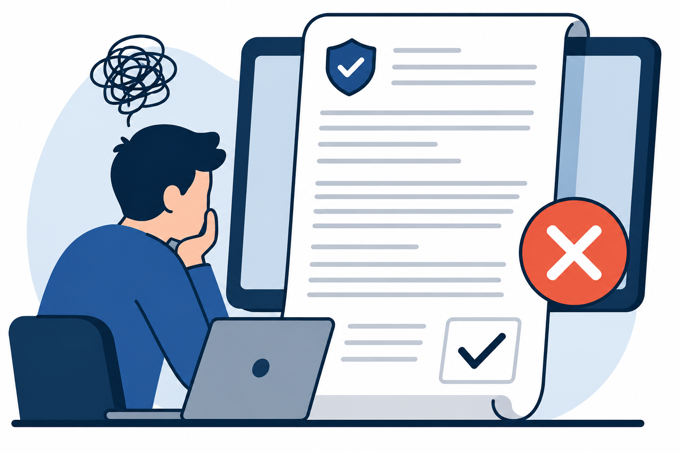
We have all been there. A long document appears at the worst possible moment. You are trying to buy something, open an account, instruct a firm, download an app, start a claim, complete onboarding or move to the next step. Then the legal terms appear like a wall.
You know they matter. You know you are meant to read them. But they are long, dense, full of legal language and usually presented at the exact point where you are trying to get something done.
So most people do what most people do. They scroll, skim, tick, accept and move on.
That is the real problem. Businesses often treat acceptance as proof of understanding. But an accepted document is not always an understood document. A checked box does not prove the person knew what they were agreeing to. A signature does not prove they noticed the fee clause, cancellation term, limitation, exclusion or risk warning.
This blog is not about blaming the client. It is about being honest about how people behave. If almost nobody reads terms and conditions properly, then the answer cannot just be to make the document available and hope for the best. The answer has to be a better way to present agreements.
That is where  i agree comes in. The future is not more boxes to tick. It is better understanding before someone agrees.
People do not read terms and conditions because the format is usually working against them.
The issue is not just length. It is the combination of length, timing, language and pressure. Terms and conditions are often shown when the person is already halfway through a task. They want to finish the journey, not pause and study a document that feels like it was written for lawyers.
That creates a strange situation. The business has technically provided the terms, but the customer has not realistically absorbed them.
There are a few common reasons this happens:
This is why terms and conditions readability matters. If the terms are technically available but practically unreadable, the business may have a process problem hiding in plain sight.
That is also why behavioural science and contract comprehension are so important. People do not engage with information just because it exists. They engage with it when it is presented in a way that fits how people actually think, decide and remember.
The exact figure changes depending on the study, sector and type of agreement, but the pattern is very clear: a lot of people accept terms without reading them properly.
The European Commission has published research into consumer attitudes towards terms and conditions, looking at readership, comprehension and trust across EU member states. Its work makes the same broad point many businesses already know from experience: traditional terms are often accepted without meaningful engagement.
A Financial Services Consumer Panel report on consent and data sharing also found that over half of contributors said they did not read any terms and conditions for products and services they signed up for, including services that could access financial data.
That is not a small issue. That is a warning sign.
If a person does not read terms for something basic, they are even less likely to properly absorb a long agreement when it involves legal, financial or technical language. This is why businesses in regulated sectors should be especially careful. The more important the decision, the weaker it feels to rely only on a passive document and an acceptance button.
i agree talks about this directly in why signatures fail as proof of understanding. A signature or acceptance step may prove that a process was completed, but it does not show what the person actually understood.
And that is the gap businesses need to close.
Terms and conditions are hard to read because they are normally designed to protect the business, not guide the reader.
That does not mean the business is trying to be unfair. It means the document has probably been written for legal coverage first. The wording is precise, detailed and cautious. That may be useful in a dispute, but it is not always useful in the moment someone is trying to understand what they are agreeing to.
Common readability problems include:
This creates a problem for both sides. The client does not fully understand what they are accepting. The business later assumes the client understood because the information was included.
That assumption is risky.
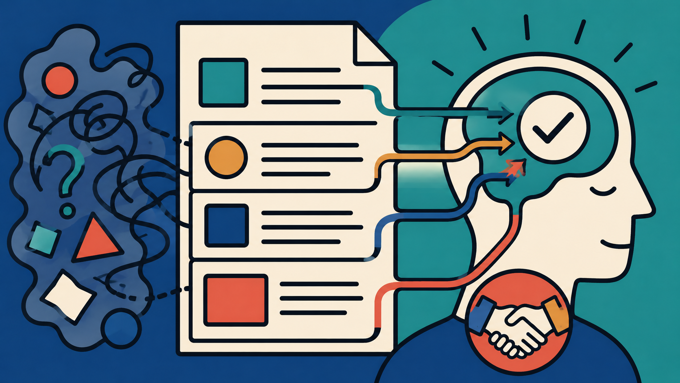
A better approach is to keep the legal document intact, but add a clearer layer around it. This could include plain English summaries, key term highlights, voice or video explanations and a chance to ask questions. That is the model explained in how i agree works.
The legal contract still exists. The difference is that the person is not left alone to decode it.
People accept contracts without reading them because they often feel they have no real alternative.
In many online journeys, terms and conditions are presented as a gate. You either accept and continue, or you stop. That makes the agreement feel less like a meaningful decision and more like an obstacle.
That changes the way people behave. Instead of thinking, what am I agreeing to?, they think, how do I get to the next screen?
There is also a trust shortcut. If someone already trusts a brand, firm or adviser, they are less likely to examine every term. They may assume the agreement is standard. They may believe someone would have told them if there was anything unusual. They may think the important parts will be explained later.
That trust can be valuable, but it can also be fragile. If something later surprises the client, the business may say the term was available. The client may say it was never made clear.
This is where informed consent beyond signatures becomes important. Consent should not just mean the person reached the end of the process. It should mean they had a fair chance to understand the key points before agreeing.
Acceptance without understanding is not a strong foundation for a good client relationship.
Mobile behaviour has changed how people consume information.
People now deal with serious decisions on small screens. They open documents on the train, between meetings, at home, during a break or while doing something else. A contract that may have been difficult to read on a desktop becomes even harder on a phone.
Deloitte’s UK mobile research has reported very high daily smartphone use, with smartphones becoming deeply embedded in everyday life. That matters because agreement journeys are no longer happening in calm, formal settings. They are happening inside busy digital habits.
On mobile, people are more likely to:
This does not mean mobile is bad for agreements. It means the agreement experience has to be designed for mobile reality.
That is why the future of agreement journeys will not just be a smaller PDF on a smaller screen. It will be clearer, shorter, layered and more interactive. i agree explores this in the future of agreements with voice and video consent in the UK.
People already use video and voice notes to understand everyday information. Agreement processes need to catch up.
Unread contracts create risk because the business may believe the client understood something that the client never actually absorbed.
That misunderstanding might not appear straight away. At the point of acceptance, everything looks fine. The agreement is completed. The system records the action. The business moves on.
The problem appears later.
The client questions a fee. They challenge a cancellation term. They say they did not know what the service included. They complain that a key limitation was not explained. The business points to the terms. The client says they were never made clear.
This can lead to:
This is why consumer understanding reduces disputes and complaints. Clearer agreement journeys do not just help the client. They protect the business too.
i agree also explains the evidence side in contract transparency and audit trails. If a client later says they did not understand, it is much stronger to show what was explained, how it was shown, what questions were asked and how the client confirmed understanding.
A document alone is often not enough. The journey around the document matters.
Businesses can make terms and conditions easier to understand by changing the way they present the information, not just the wording.
Plain English is a good start. But plain English alone does not fix the whole problem. A plain document can still be too long, too passive or too easy to ignore.
A better approach is to design for understanding from the start.
That means:
This is the practical shift from terms and conditions as a legal file to terms and conditions as a communication experience.
For regulated firms, this is even more important. i agree explains this in FCA and SRA compliance for informed agreements, and it is also relevant for law firms that need clearer client care journeys and financial services firms focused on customer understanding.
The point is simple. If the agreement matters, the explanation matters too.
Yes. The better way is not to remove terms and conditions. It is to stop pretending the document can do all the work on its own.
The legal terms still matter. They still need to exist. But the client should not have to dig through them alone to understand the decision they are making.
A better agreement journey gives the client:
That is a very different experience from a PDF and a tick box.
It is also why i agree positions itself as an e signature alternative for UK firms. The problem is not only how someone signs. The bigger question is whether they understood enough to agree in the first place.
The commercial case is covered in the benefits of i agree, but the human case is just as important. People should not need a law degree to understand the agreement in front of them. They should be guided through the important parts in a way that feels clear, fair and respectful.
Traditional terms and conditions are not going away. But the way we present them should change.
Because nobody reading the terms is not just a user problem. It is a design problem.
And design problems can be fixed.
It has become normal to joke that nobody reads terms and conditions.
But for businesses, that joke should feel uncomfortable.
If people are accepting agreements without reading them, the risk has not disappeared. It has just been delayed. It may come back later as confusion, complaints, disputes, regulatory questions or loss of trust.
The better response is not to make terms even longer. It is not to add another checkbox. It is not to rely on the same process and hope the client remembers a clause they probably never saw.
The better response is to build agreement journeys around understanding.
That means presenting the key points clearly. Giving people the right information at the right time. Using formats people actually engage with. Letting them ask questions. Capturing evidence that the client understood, not just that they clicked.
This is what i agree is built for. Not faster signatures. Better agreements.
If your clients are not reading your terms and conditions, the real question is not, how do we force them to read more?
The better question is: how do we help them understand what matters?
To see what that looks like in practice, explore how i agree turns contracts into guided understanding journeys or speak to i agree about improving your agreement process.
i agree homepage Useful for readers who want to understand the wider platform and the move beyond traditional agreement processes. i agree works Explains how existing contracts become guided agreement journeys with video, plain English summaries, questions and audit trails. i agree Shows the commercial case for better client understanding, fewer disputes and stronger evidence. i agree for law firms Relevant for firms using client care letters, engagement letters and legal terms. i agree for financial services Relevant for firms where customer understanding and regulatory evidence matter. i agree for motor finance claims Useful for high risk agreement journeys where clients need to understand fees, process and consent. i agree frequently asked questions A helpful next step for readers who want practical answers about how the platform works. i agree principles Relevant for readers interested in the values behind clearer, fairer agreements. i agree Next step for businesses that want to improve how clients understand agreements.Most people do not read terms and conditions because they are long, dense and shown at the wrong moment. The person usually wants to complete a task, not study legal wording. This means they often skim, accept and move on without fully understanding the key terms.
Terms and conditions can still be legally binding even if the person did not read every word. But for businesses, relying only on acceptance can be risky. If a key term was not made clear, there may still be complaints, disputes or questions about fairness and understanding.
Unread contracts are agreements that people accept without properly reading or understanding them. This often happens with online terms, client care letters, financial agreements and service contracts. The issue is not just whether the document was available, but whether the person understood what mattered.
Businesses can improve readability by using plain English, shorter sections, clear headings, key term summaries and visual signposting. But readability is only part of the answer. The strongest journeys also include video, questions, confirmation steps and an audit trail of what the client understood.
Unread contracts can lead to surprise, confusion and complaints later. A customer may challenge fees, cancellation terms or limitations they did not notice. The business may point to the contract, but the customer may say the key information was not explained clearly enough before they agreed.
A better alternative is a guided agreement journey. The full legal terms still exist, but the client also receives plain English summaries, key term highlights, video or voice explanations and the chance to ask questions. This creates stronger understanding and better evidence of informed consent.