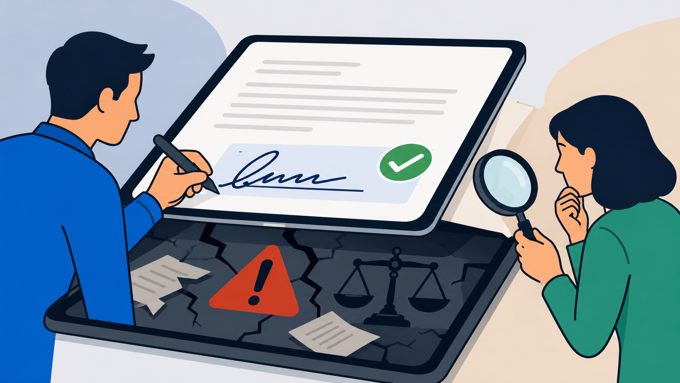
Rising SRA reports show why client understanding matters
Contract News
Recent News
Reducing Disputes
20/05/2026
15 min read

19 February 2025
4 min read
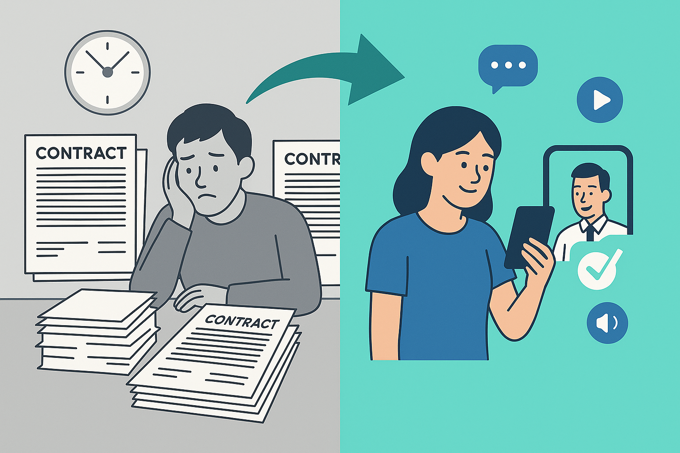
The next generation doesn’t just prefer digital solutions. They expect them. Businesses that fail to adapt risk becoming irrelevant, while those that embrace change secure customer loyalty for years to come.
Throughout history, younger generations have driven businesses to evolve. From how we shop to how we bank, technology has always been shaped by new consumer habits. Yet, one critical area has been left behind: contracts.
Every major shift in business has been driven by changing customer expectations.
Each shift followed the same pattern. Businesses that embraced new ways of engaging customers thrived, while those that resisted faded into the background.
Ignoring change has never worked out well for businesses. History is full of companies that failed to move with the times and lost everything.
These companies had loyal customers but lost them by refusing to evolve.
Despite all this progress, contracts remain stuck in the past. Most agreements are still long, complicated, and full of legal jargon that people don’t actually read.
Research from the Legal Services Board shows that unclear contracts lead to more disputes. The Behavioural Insights Team found that simplifying legal language improves understanding by up to 40%. Yet, businesses still expect customers to scroll through pages of text and tick a box without fully engaging with what they’re signing.
For a generation used to quick, visual, and interactive communication, this approach no longer works.
 i agree meets the next generation where they are
Gen Z and Millennials don’t just read. They engage. They use video messages on Snapchat, send voice notes instead of texts, and expect interactive, intuitive experiences.
That’s why i agree is embracing the future of agreements by making contracts work the way people actually communicate. Instead of forcing customers to scroll through long documents, we use:
By making agreements simple, visual, and engaging, i agree ensures that businesses build trust with the next generation on their terms.
History has shown that companies that evolve with their customers don’t just survive. They lead. Younger generations have already reshaped industries, and contracts are next.
The question is, will your business embrace the change or be left behind?
Younger consumers expect fast, digital, and interactive experiences. They’ve grown up with mobile apps, video content, and instant access to services. This shifts expectations across industries, pushing businesses to evolve or risk losing relevance as customer behaviour continues to move away from traditional models.
Companies that resist change often lose market share or disappear entirely. Examples like Blockbuster and Kodak show how failing to embrace new technology can lead to decline, even for once-dominant brands with strong customer loyalty.
Most contracts remain long, text-heavy, and difficult to understand. They rely on legal language and static PDFs that people rarely read. This approach clashes with modern communication habits, where users prefer short, visual, and interactive formats that are quicker to process.
Gen Z and Millennials favour video, voice notes, and interactive content over long text. Platforms like Netflix and Spotify reflect this shift, showing that fast, visual communication is now the default expectation across industries.
i agree adapt contracts for modern users?
i agree replaces dense contracts with clear summaries, video explanations, and interactive steps. This approach helps users engage with key terms in formats they already understand, making agreements easier to follow and reducing the risk of misunderstanding.
Customer expectations have already changed. Businesses that modernise contracts build trust, reduce disputes, and improve user experience. Those that delay risk falling behind competitors who deliver clearer, more engaging agreement processes aligned with how people communicate today.