Rising SRA reports show why client understanding matters
Contract News
Recent News
Reducing Disputes
20/05/2026
15 min read

10 March 2026
12 min read
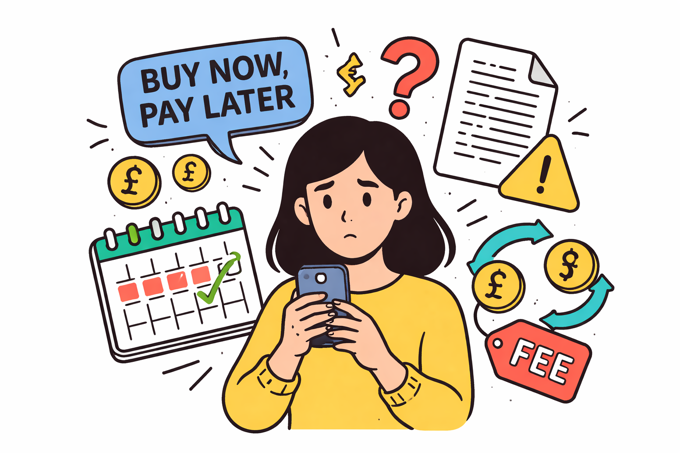
Buy now pay later has quietly become one of the most normal decisions we make online. Not because we have all sat down and decided that instalment credit is the future, but because it is now designed into the checkout experience.
And this is why recent headlines about Klarna, affordability, and new UK protections matter. The Financial Conduct Authority has confirmed that unregulated deferred payment credit, often described as buy now pay later, will come under FCA regulation and the Consumer Duty later this year.
Regulation will help. But I keep coming back to a simpler question that sits underneath all the policy changes and media coverage. Do customers actually understand the agreements they are accepting?
Let’s start with scale, because it explains why this has moved from a niche product to a societal conversation. In its Financial Lives research, the FCA reports that deferred payment credit, the category it uses to describe unregulated buy now pay later, was used by 20% of UK adults in the 12 months to May 2024. That is 10.9 million people. It is also not evenly distributed. The FCA notes higher use among lone parents, women aged 25 to 34, and Black adults.
And while many people use it occasionally, a meaningful proportion use it frequently. The FCA reports that 1.9 million adults used deferred payment credit ten or more times in the previous 12 months, and that frequent users were more likely to show markers of low resilience and financial difficulty. So, buy now pay later is not simply a convenience feature for the financially comfortable. It sits right inside the lives of people who are budgeting, juggling, and often trying to spread risk across the month. That matters for one reason above all. When a product is used at scale by groups more likely to be financially stretched, the quality of communication stops being a “nice to have”. It becomes part of consumer protection.
Most analysis focuses on the fact that buy now pay later looks cheap and feels easy. That is true, but it is not the full story. MaPS, through research it commissioned with the Behavioural Insights Team, describes three drivers that explain adoption: awareness, accessibility, and affordability. It also highlights that people are increasingly using buy now pay later for day to day essentials, not just occasional discretionary purchases.
The FCA’s Financial Lives findings line up with that. Over half of deferred payment credit users said they use it to help them budget or to buy goods they could not afford to pay for in one go. There is also a behavioural point that rarely gets talked about plainly. At the moment you choose buy now pay later, you are not “taking out credit” in the way you would if you were applying for a personal loan. You are selecting a payment option next to card, PayPal, or Apple Pay, often while tired, distracted, and trying to complete a purchase.
The FCA’s own research on deferred payment credit explicitly flags this as part of the risk picture: the product can be misunderstood as a form of payment rather than a form of credit, and it can be sold in ways that exploit behavioural biases, such as being set as a default option at checkouts. In other words, the growth of buy now pay later is not only about consumer preference. It is also about design choices that reduce the feeling of friction in the moment that matters most.
If you have been following “BNPL regulation UK” updates, the key change is simple: unregulated deferred payment credit is moving into the FCA’s perimeter. The FCA has confirmed that buy now pay later borrowers will receive stronger protections from mid July 2026, with the sector brought under FCA regulation and subject to the Consumer Duty. In the FCA’s summary, the protections include:
The FCA also sets out crucial scope details that most people miss when they read headlines. Deferred payment credit will be regulated in certain third party lending arrangements, but not all forms of “pay later” will fall into the same bucket. And the FCA notes that deferred payment credit agreements taken out before regulation day will remain unregulated.
So regulation is not a magic wand. It is a baseline. It upgrades protections, raises expectations, and forces consistency. But it does not automatically solve the human problem, which is that people still have to take in, process, and remember the terms they agree to. That is why I see this moment as bigger than buy now pay later. It is a signal of where the entire financial services sector is going: away from disclosure as a box ticking exercise, and towards evidence of real consumer understanding.
Here is the uncomfortable truth. Most of our digital consent is performative. We have built an internet economy around a ritual where people click “accept” and move on. Empirical studies consistently show that when people are presented with long online terms, engagement is tiny. In one well known experimental study, average observed reading times were measured in seconds, even though predicted reading time for the full text would have been many minutes. The vast majority of participants agreed to terms anyway.
And this is not limited to social media or privacy policies. It is a predictable response to information overload. One survey often cited in this area found that a very high proportion of consumers agree to terms without reading them, particularly younger adults. Now apply that reality to a credit decision made at checkout, often on a phone, often in a rush. It becomes difficult to argue that “the information was available” is the same thing as “the customer understood it”. We can see the consequences showing up in advice and support channels. Citizens Advice has said that it helped 7,468 people with a buy now pay later issue in 2025, and 844 people in the first month of 2026, with debt repayment issues being the dominant theme.
Separately, Fair4All Finance highlights a striking understanding gap: its analysis reports that four in ten users still do not identify buy now pay later as a form of debt. And Citizens Advice has argued for years that the customer journey at checkout often lacks sufficient care and information, with some users being referred to debt collectors despite not being warned about this at checkout. In other words, the “buy now pay later risks” conversation is not only about APRs or fees. It is about whether the product is presented and understood as credit, with real consequences, rather than as a harmless payment choice.
Klarna terms explained, in plain English, shows how easy it is for the detail to slip past people at the point of sale.
None of this is “hidden” in the sense that the information does not exist. The problem is that the decision environment is not designed for learning. It is designed for completion. The FCA’s own research on deferred payment credit frames potential harms in terms that are, at heart, about understanding: information asymmetries, behavioural distortions, and consumer protections that people may not realise they do or do not have.
There is a reason the FCA’s Consumer Duty has become such a big topic, even beyond traditional “compliance” circles. It reframes the standard from “did you disclose?” to “did you deliver a good outcome?” At the core of the Duty are four outcomes, one of which is consumer understanding. The FCA also makes clear that firms must consider how customers behave at every stage of the customer journey, including those with characteristics of vulnerability.
This is the moment where the difference between legal consent and informed consent matters.
This is also why buy now pay later regulation is about more than licences and permissions. It is an attempt to force better “decision architecture” into a process that has historically been optimised for speed and conversion.
If you want the deeper philosophy behind this, that is the lens we use at  i agree. We treat agreement as a communication outcome, not a document outcome. It is why our thinking starts with informed consent and not just signatures. Read our page on informed consent beyond signatures at i agree. And because understanding is shaped by context (time pressure, financial stress, device, language, confidence), we also look at how to capture that decision journey, not just the final click. See what we mean by context contracts at i agree.
When I say “better agreements”, I don’t mean longer explanations. I mean clearer ones, delivered in a way that fits the moment, and creates evidence that the customer understood the material points. Regulation will require clearer information. The FCA says firms must give customers information before they take out a deferred payment credit agreement, including the amount borrowed, repayment timing and amounts, late fees, and the rights and protections that apply.
So the question becomes: how do you deliver that in a way that people actually absorb?
Start with a “key facts” layer that is built for scanning
Make the product identity unambiguous
Add light friction at the right moment
Use comprehension signals, not just disclosures
i agree, this is part of how we think about proving understanding: not “we sent it”, but “they engaged with it”. See the behavioural science lens we use at i agree. Build support into the journey, not just into arrears
The FCA’s research shows that missed or late repayments are not rare. It notes that, on average, 10% of transactions in January 2023 had at least one missed or late repayment, and some late repayments incurred fees. That is exactly where reminders, budgeting nudges, and clear repayment schedules matter. MaPS research on BNPL interventions found that people were most supportive of repayment reminders, which some providers already offer. And under the new regime, support is not optional. The FCA expects lenders to offer support to customers in financial difficulty and direct them to free debt advice where appropriate.
Keep a “receipt of understanding”, not just a receipt of purchase
i agree goes deeper on why retention matters. If you want a practical illustration of how we turn agreements into guided experiences, this is the step by step workflow behind i agree. How i agree works.
Buy now pay later is a pressure test for the next decade of financial services. Not because it is the biggest product in the market, but because it exposes a tension that has been building for years. On one side, digital journeys have been optimised for speed. On the other, regulators now expect firms to take responsibility for whether their customers understand the product, not merely whether information exists somewhere on a page.
The FCA’s research paints a nuanced picture that is worth taking seriously. Its Occasional Paper on deferred payment credit finds that DPC users are, on average, more vulnerable than the wider UK population, and almost twice as likely to be in serious financial distress, even while the paper does not find consistent evidence that DPC borrowing causes medium term financial distress on average.
Fair4All Finance makes a similar point from a different angle: regulation is necessary, but there can be trade offs, including the risk that over cautious restrictions could exclude vulnerable users who need safe credit options, and the continued misunderstanding by many users that BNPL is debt.
That combination creates a clear design challenge for the industry.
Conclusion
The issue is not whether buy now pay later can be useful. For millions of people, it already is. The issue is whether the agreement experience has been designed for real understanding, in the real conditions people make decisions. If regulation is the new floor, then consumer understanding is the new ceiling. That is where trust will be won and lost in modern finance.
If you are thinking about this from an agreements perspective, these pages add context without repeating this blog: i agree principles, consumer understanding and disputes at i agree, and the future of agreements with voice and video at i agree.
Internal links
i agree i agree i agree works i agree principles i agree frequently asked questions i agree i agree i agree to traditional e-sign toolsExternal links
Research suggests many people do not fully understand buy now pay later agreements. A significant number of users do not recognise it as a form of debt, and many agree to terms quickly at checkout without fully processing repayment schedules, fees, or consequences of missed payments.
Yes, buy now pay later is a form of credit. Even though it is presented as a payment option, it involves borrowing money that must be repaid later. Missing payments can lead to fees, collections activity, and potential financial stress.
Buy now pay later is widely used because it is easy, accessible, and integrated into online checkouts. Many people use it to spread costs or manage cash flow, especially for everyday purchases, rather than seeing it as a traditional credit product.
The main risks include missing payments, incurring late fees, and building up multiple commitments that become difficult to manage. Because the process is quick and frictionless, users may take on credit without fully understanding the financial impact.
Yes, buy now pay later products are being brought under the Financial Conduct Authority. This will introduce stronger protections, including clearer information, affordability checks, and access to complaints through the Financial Ombudsman Service.
Clearer agreements focus on simple, upfront information about repayments, fees, and risks. This can include short summaries, prompts at the point of decision, and confirmation steps that ensure users understand key terms before proceeding, rather than relying on long terms and conditions.